Preventing Central AC Mold Problems

central air conditioner problems
Exposure to mold in the home can cause health symptoms, including coughing, itchy eyes, and other symptoms. In people with underlying health conditions such as respiratory impairments like allergies asthma, mold can lead to difficulty breathing.

Because air conditioners create moisture through condensation, standing water can potentially lead to mold growth. If mold is present on the air conditioner, the air handler can circulate this mold spores throughout the home.

If you notice a musty odor when the air conditioner is running, or see mold on the outside of the unit, have a professional inspect and clean the unit. The drain condensate lines should be cleared to ensure that moisture is draining away and collecting in the pan to allow mold to grow.

Take Steps To Preventing Mold Growth In Your HVAC System

  • Replace air filters regularly
  • Seal air ducts to reduce condensation
  • Keep air conditioner drain lines and drip pans clean
  • If excess humidity is a problem in your home, consider installing a dehumidifier
  • Check your air ducts for dirt buildup and have them professionally cleaned if needed

Have concerns about mold growth in your central air conditioner or air ducts? Call Superior Plumbing and Heating, we can help diagnose the cause and recommend solutions to remove existing mold and prevent future mold growth.

AC Won’t Turn On? Here’s What to Check

5 Tips To Lower Your Cooling Costs

It’s the first hot day of spring and your central air conditioner won’t turn on, or isn’t blowing cold air. What should you do? There can be many causes when an AC won’t run or cool sufficiently. Here are a few things you can check yourself before calling for service.

1. Thermostat or Sensor Problems

Check that the thermostat is set to “cool” and is set low enough to turn the unit on. Also ensure that the batteries are charged if the thermostat has batteries. If the unit still will not turn on, check that the circuit breaker hasn’t tripped. If the breaker has tripped reset it to the on position. If it trips again, don’t reset the circuit. Call for service to have the electrical problem fixed.

2. Drainage Problems

A damaged refrigerant line or broken fan can cause the air conditioner coil to freeze, which in turn will cause the unit to malfunction.  Ensure that the drain pan is not backed up. If it is clogged, clear the drain line to empty the pan.

3. Dirty Furnace Air Filter

Air filters should be replaced monthly or as recommended by the filter manufacturer. A dirty filter will cause the air conditioner to run more frequently, reducing efficiency, wasting energy and shortening the lifespan of the unit. If the filter becomes excessively dirty it can cause the AC to malfunction and shut down.

4. Leaking or Obstructed Air Ducts

Air ducts are an often overlooked part of a home’s cooling system. Air duct cleaning and sealing can ensure that your system cools as efficiently as possible without wasting energy.

5. Low Refrigerant Levels

An air conditioner that is running, but staying on too long and not cooling properly, may have a refrigerant leak or be insufficiently filled.

When problems arise with central air conditioners  it’s usually the result of lack of maintenance or an aging unit that is reaching the end of its lifespan. If you’re experiencing problems with your home’s air conditioner, call Superior Plumbing and Heating. From annual AC maintenance and repairs, to new cooling system installation, we have you covered.

Preventing Tankless Water Heater Problems

Common Tankless Water Heater Problems

Tankless water heaters are hi-tech appliances that solve many of the problems of conventional tank-style water heaters. By heating water on demand only when needed, they save a lot of energy and can provide a virtually endless supply of hot water. When properly maintained a tankless water heater should last around 20 years – about twice the lifespan of a conventional water heater.

Common Tankless Water Heater Issues

1. Excessive Mineral Build-up

Hard water can lead to mineral buildup which makes ongoing maintenance essential. The unit should be flushed with vinegar following the manufacturer’s instructions to prevent minerals from reducing performance or potentially damaging the unit. If your home has excessively hard water, it’s recommended you install a water softener to prevent excessive mineral deposits form accumulating in the water lines.

2. Lack of Maintenance

This is related to the above problem. Most tankless water heater manufacturers include a maintenance schedule in the owner’s manual. One of these maintenance items is flushing the water lines, usually with vinegar, to prevent the accumulation of mineral deposits that can build up over time and reduce burner efficiency and water flow. Check your owner’s manual for the correct procedure for your tankless unit. Or, give us a call, we would be happy to help.

3. Burner Corrosion

While you’re more likely to experience corrosion problems with a conventional tank-style water heater, tankless water heaters can also be damaged by corrosion if condensation drips onto on the gas burner and causes problems with the gas supply.

4. Excessive Demand

Before installing a new tankless water heater your plumber will ask about your water usage to calculate which unit will best serve your hot water needs. If you exceed the capacity of the unit by showering, doing laundry and other water-intensive tasks simultaneously, the unit may shut down to prevent damage from over heating. If you use a lot of hot water at the same time in different areas of your home, you may be better off going with a larger tank-style water heater.

5. Improper Installation

When a tankless water heater is installed it’s essential that the unit have enough ventilation to allow excess heat to escape, and in the case of gas units, for exhaust gases to vent to the outside of the home. If not properly vented, the unit may overheat and automatically shut down as a safety precaution.

Have questions about tankless water heaters? Call Superior Plumbing & Heating. We can help answer all your water heater questions.

Hot Room, Cold Room – Improving Comfort Throughout Your Home

Uneven heating and cooling problems
Photo by Im3rd Media on Unsplash

Do you have rooms in your home that are always too hot or too cold? Uneven temperature zones are not only an annoyance, they’re often a sign that a home’s air delivery system is not working correctly. Simply closing or opening vents and adjust the thermostat well above or below where it should be to maintain a comfortable setting is likely to just waste more energy while doing little to improve comfort.

Several factors can contribute to uneven room temperatures, and fortunately, they can all be solved. Here are a few things to check:

Air Delivery System & Ductwork

If airflow to certain parts of the home is out of balance, you’ll experience uneven cooling in those areas. An airflow imbalance also causes your HVAC to work overtime, which in turn will shorten your system’s life and decrease its efficiency.

In order to create a balanced airflow Superior Plumbing & Heating can inspect your home’s ductwork to ensure the system is properly sized. Identifying leaks and blockages is also important, as even small air duct leaks are a  contributor to inefficiency and uneven temperatures. An effective solution for leaking air ducts is air duct sealing.

Once the underlying causes of the air delivery imbalance have been identified,  repairs or replacement of the ductwork can be made to get the system functioning normally again.

Variable Speed Motors

Variable speed motors provide more even heating and cooling, and allow for more precise control of airflow throughout the home. By moving the air more slowly through the system, variable speed motors can help make a home’s air filtration and moisture control systems more effective. They adjust the system’s output based on the home’s cooling needs. They can also be helpful in situations where uneven cooling is actually desired. If there are rooms in your home that are rarely used, you can save money by keeping them at a slightly higher or lower temperature than the other rooms in your home. This involves “zoning,” which means customizing temperature settings for different areas of the home. In general, variable speed motors are the only systems that allow for zoning within the home.

Air Conditioning Sizing

Just as you’re experiencing discomfort due to uneven temperatures, your system is constantly trying to compensate, which means high utility bills and the potential for costly repairs.

An improperly sized HVAC system may result in uneven cooling. This could be the result of either an incorrect load calculation at the time of the system’s installation or a home’s heating and cooling needs changing over time. For example, it is common that an extra room is added or an area like an attic is converted into living space. If your HVAC system is too small to properly heat or cool your home, uneven temperatures and system failures could result. To determine whether your HVAC system is properly sized, contact Superior Plumbing & Heating for an up-to-date load calculation.

Choosing a Ductless Heating and Cooling System

Choosing a Ductless Heating and Cooling System

Mini-Split Systems Offer Many Advantages and Options

Ductless mini-split systems have become increasingly popular in recent years. Whether you have a new addition that you need to heat and cool, a room that’s not connected to the home’s air duct system, or no central heating and cooling at all, ductless systems are an ideal solution for many situations.

Is a Ductless System Right For My Needs?

When deciding whether ductless system is right for your home, consider the following questions.
How Many Rooms Are You Heating and Cooling?
One of the main advantages of ductless mini-split systems is their ability to control the temperature in each room, or zone, separately. Depending on the model, you can cool and heat between 1 to 8 separate zones.  You may have only one zone, such as a 3-season porch. Or, you may need a zone for multiple rooms in your home. Being able to control multiple zones independently not only improves comfort, it can lower your utility bill.

What Size Do You Need?
Choosing the right size unit for each room is important for ensuring  comfort and efficiency. The capacity of air conditioners is measured in BTUs. The higher the BTUs, the larger the volume of air an air the unit will be able to effectively cool. Some product specs will list the size of a room it’s designed to cool. Or, you can also do the calculations yourself based on the products BTU rating. Generally, the square footage of a room translates into the following number of BTUs needed:

300 sq. ft. 7,000 BTUs
350 sq. ft. 8,000 BTUs
400 sq. ft. 9,000 BTUs
450 sq. ft. 10,000 BTUs
500 sq. ft. 11,000 BTUs
550 sq. ft. 12,000 BTUs
625 sq. ft. 13,000 BTUs
700 sq. ft. 14,000 BTUs
1,000 sq. ft. 18,000 BTUs

Installation Location
One of the main advantages of ductless systems is the flexibility of installation. While window air conditioner are limited certain types of windows, a ductless unit can be installed in the floor, the ceiling or on the wall. Wherever it’s installed, mini-split units are compact, quiet and unobtrusive.

Additional Features

  • Remote control operation – Most ductless systems come with a wireless remote for controlling the unit. Some offer smartphone apps that let you monitor and control the system while you’re away from home.
  • Timers
  • Reusable filters

Have questions about choosing the right ductless cooling and heating system for your home? Call Superior Plumbing & Heating. We can help answer all your questions.

Central Air Conditioner Making Strange Noises?

Central Air Conditioner Noises

Here are the possible causes for a noisy air conditioner

Central air conditioners have many moving parts that must work together to keep your home cool. Over time these parts are subject to wear and tear. AC noises can be a simple fix, like a loose panel cover, or a sign of a more serious problem.

AC Rattling Noises

Rattling noises are fairly common with air conditioners. Over time the various fasteners attaching components to the unit can come loose. If you hear rattling, check the screws or bolts holding the cover plates in place. If the rattling noises persist after tightening the panels, remove the cover and check internally for the same issue. After listening for rattles, always turn the power to the unit off at the breaker.

AC Whistling Sounds

Whistling sounds are usually heard when seals are leaking. Check for cracks and gaps in the seams of ducts near the unit and the ductwork that carries the air throughout the home. Examine the seams around these areas for loose connections and retighten any screws or bolts. If heat tape was used to also cover the seals, make sure the tape completely adheres to the duct seams.

Screeching Sounds

Like your car, the air conditioner motor uses belts. If there is periodic screeching that only occurs when the unit turns on to blow air or cool the air down, it is likely a worn-out belt that needs to be replaced. Over time belts can stretch and wear out. A qualified HVAC technician should check the belt and replace it if needed.

AC Making Clunking Sounds

Clunking sounds can mean something has come loose inside the air conditioner unit. A loose fan blade on a motor can make sounds as it turns. Or it could be a plastic component or cover plate coming into contact with the. A qualified HVAC technician should inspect the unit to ensure it is operating safely.

If you’re central air conditioner is making strange noises, or isn’t cooling, call Superior Plumbing & Heating. Our experienced technicians can track down the cause and recommend repairs if needed.

Transfer Switches For Home Generators

Home generator transfer switches

Whether you’re installing a portable or permanent standby generator, a transfer switch is an important safety device that allows for the safe transfer of power between the electrical grid and your generator. A transfer switch prevents a dangerous condition called back feeding – which can damage a home’s electrical system, cause a fire, and pose a serious danger to utility workers performing service on electrical lines.

How a generator transfer switch works Transfer switches are installed at a home’s electrical service panel and can connect to a single circuit or multiple circuits, depending on the design and capacity of the generator. A transfer switch is required by the National Electric Code for any connection of power to a home and must be installed by a licensed electrician.
How an Automatic Transfer Switch (ATS) works

  1. The utility company’s power shuts off because of a lightning strike, downed power line or other equipment malfunction.
  2. The transfer switch detects the loss of voltage from the utility and immediately shifts the load to the emergency power source when power from the generator is stable and within prescribed voltage and frequency tolerances.
  3. When power from the utility company is restored, the transfer switch retransfers the load from the generator to the normal power source.

Portable generators typically use manual transfer switches, while permanent standby generators will require an automatic transfer switch. A manual transfer switch will not work with a standby generator.

Depending on your power needs, a transfer switches can provide between 50-400 amps. Before installation you will need to know whether you want to power your entire electrical panel, or only your home’s essential appliances, such as the refrigerator and HVAC system.

Have questions about transfer switches for your home’s portable or standby generator? Call Superior Plumbing and Heating.

Air Conditioner Inspections For Homebuyers

Air Conditioner Inspections For Home buyers

Before moving into a new home, you’ll have many items to complete on your home inspection checklist. Among the most important systems to have checked out is the central air conditioner. Here are a few simple things you can check yourself to ensure that the air conditioner is working properly and has been regularly maintained.

Ask the homeowner for the age of the air conditioner and furnace. If it’s older than 10 years old, it will need to be replaced within a couple years, possibly sooner if it has not been regularly maintained.

While Superior Plumbing and Heating can provide a complete HVAC system inspection to find any potential problems that could cause trouble down the road, If you want to perform a basic check the central cooling system yourself, here’s what to look for.

Check the Condenser Unit Outside the Home

  1. The outside section of the air conditioner, called the condenser, should be clean and unobstructed.
  2. The unit draws air in from the sides to dissipate heat, so ensure that there are no trees, shrubs or other objects near the unit that could reduce air flow.
  3. The fins and condensing coils of the air conditioner should be clean, without excessive dirt or debris that could also reduce performance. Check for damaged metal fins.
  4. The air conditioner should be located on a clean level surface, preferably a stone or cement slab. The unit may also be suspended from the side of the house. In either case ensure that the unit is level and that the refrigerant lines are not stressed.

Inside the Home

  1. If the air conditioner is not running, turn the thermostat down about five degrees cooler than the indoor temperature. Once the AC is on, check outside again to ensure the fan at the condenser unit is turning. The unit should make a steady sound when operating. If it makes rumbling, rattling or other strange sounds or surges, have an HVAC technician inspect the unit.
  2. Check that the furnace air filter is clean and the right size for the unit. A dirty filter reduces air flow, which reduces efficiency and increases the likelihood of problems. If the furnace and filter look excessively dirty, the unit should be thoroughly inspected by a qualified HVAC technician.
  3. After the air conditioner has been running for at least 15 minutes, check the temperature of the conditioned air coming out of the register closest to the evaporator cooling inside the home. Blowing air will naturally feel cool on your skin, so use a thermometer to accurately measure the temperature and ensure it’s consistently cold from different rooms in the house.

In addition to removing heat from the home, an air conditioner also removes humidity from the air. This is the role of the evaporator coil. A drain pan sits below the evaporator coil and empties condensation (water) into a drain line. Ensure that the line is unobstructed and the pan is draining completely. Also inspect the pan and coil for signs of mold or mildew.

While the above items cover the basics of a central air conditioner inspection, there’s no substitute for a comprehensive, professional cooling system inspection performed by a trained technician. So the next time you’re moving into a new home, give us a call. You’ll rest easy knowing your air conditioner is operating reliably and efficiently.

Window Air Conditioner or Ductless Cooling?

Ductless cooling or window AC?

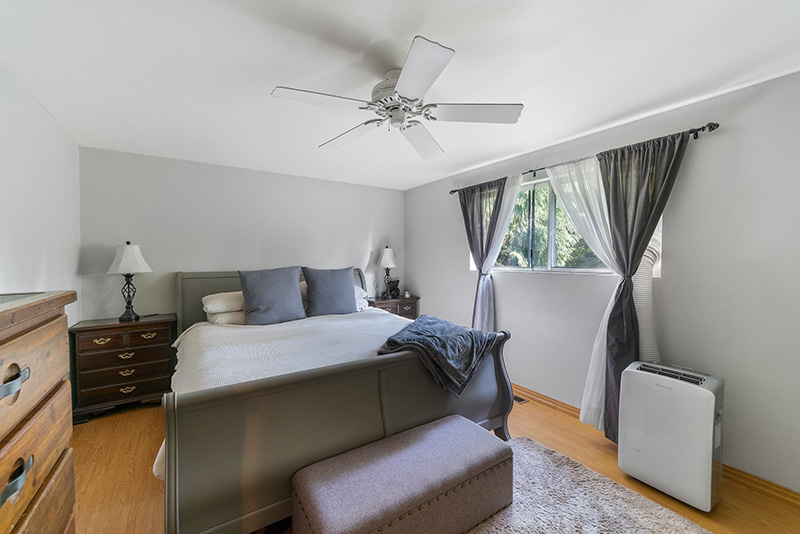
If you’re considering replacing or upgrading your home’s window air conditioner units, you may want to consider a ductless, or mini-split system instead. While the initial installation costs are typically higher, ductless systems are less obtrusive, more efficient, and convenient than traditional window air conditioners.

Here are a 5 advantages ductless systems offer over traditional window AC units.

1. Unobtrusive installation – no window needed
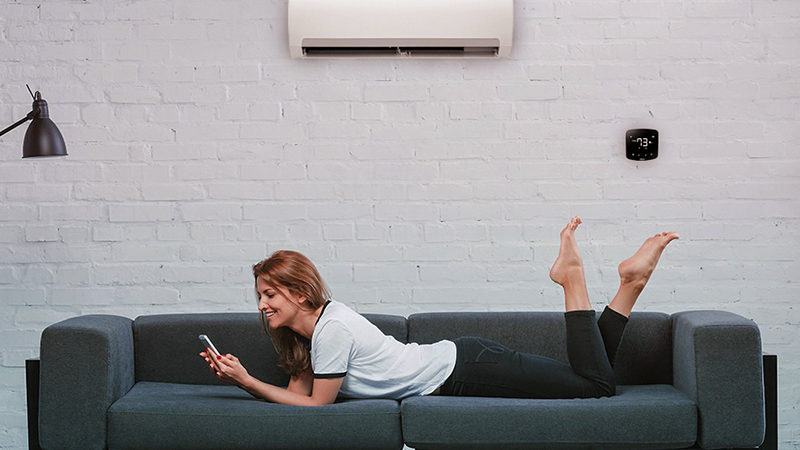
A window air conditioner blocks the view outside and can present security issues. Window AC units can also be unsightly both inside and outside the home. Ductless systems on the other hand, are compact, narrow appliances that can be mounted up high near the ceiling or in the floor. They blend in so well you’ll forget they’re even there.

2. They can also heat your home.
In addition to cooling, most ductless systems can heat as well. This is a big advantage in spaces that are not connected to ductwork, such as attics, garages and 3-season porches.

3. Expandability.
Mini-split systems can be connected together to cool and heat up to 8 rooms. This makes ductless systems a great choice when adding new additions to your home.

4. Lower Noise.
Because the condenser unit is located outside the house, mini-split systems are typically much quieter than window air conditioners.

5. Advanced Features
Some ductless systems include apps that allow you to monitor and adjust the climate from your smartphone. Program the system to heat and cool your space around your schedule to improve comfort and efficiency.

If you’re considering replacing your window air conditioners with a ductless cooling system, call Superior Plumbing & Heating. We can help answer all your home heating and cooling questions.

Problems Caused By Dry Winter Air

Dry Indoor Air Problems

How Low Humidity Can Affect Comfort and Health

During the winter months as the temperature outside begins to drop below freezing, the air inside our homes can become dry as a desert. When forced-air heat is running the humidity levels can drop to 10 percent relative humidity. This lack of moisture in the air lead to a host of potential problems. While some problems are a nuisance, such as static shock and flyaway hair, there are potentially more serious health concerns.  As mucous membranes in the body become dehydrated, respiratory irritation can occur, which in turn can make the body more susceptible to infections from the cold or the flu. Nosebleeds, sore throat, eye irritation and dermatitis (dry skin) are also side effects of excessively dry air.

Dry air can also increase the amount of time that dust, dirt, pet dander and other allergens linger in the air. This can aggravate breathing conditions such as allergies and asthma. Pathogens such as viruses and bacteria can also remain airborne longer in dry air, increasing the risk of spreading disease from person-to-person.

Home Damage From Low Humidity

Dry indoor air can also cause harm to your home’s interior. Furniture, floors, musical instruments and other wood surfaces can shrink and crack when exposed to relatively humid air and followed by low humidity levels. You may also notice that doors do not fit properly and windows are more difficult to open and close.

Whole-Home Humidification

The best defense against low humidity levels in the home is to install a bypass humidifier. Bypass Humidifiers utilize your home’s forced air heating system to add moisture to the air. Air is taken in from your home’s duct work, where it passes through a water panel absorbing moisture. This conditioned air is then dispersed back into your home as steam. The result is consistent, healthy humidity levels throughout your home. A relative humidity level of 40-60 percent during the winter months is a good target for most homes.

Have questions about improving the humidity levels in your home? Call Superior Plumbing and Heating. We have effective solutions for creating a healthier, more comfortable indoor environment.